Tuesday, October 11, 2016

The Stress of Being

  1. In colder temperatures, the homeostasis of the human body is disturbed because the blood vessels in your body can constrict. This is a problem as it is now more difficult for oxygen-rich blood to flow to important parts of the body.
  2. Adaptations
    • Short term: Shivering is the response your body has when you feel cold. Shivering is when your muscles tighten and loosen at an increased rate. This is so your muscles can generate heat on their own.

    • Facultative: Vasoconstriction makes the blood vessels smaller in order to preserve heat on our skin.

    • Developmental: Eating fattier foods which results in having a more rounder body shape, which can help insulate heat.
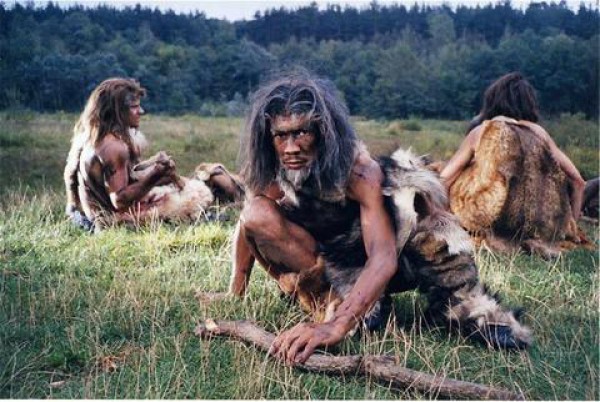
    • Cultural: Clothing is a man-made way of staying warm, for it involves physically using tools to create a means of staying warm.
Information from these explorations helps to show us the different ways we can survive, even when in life threatening environments. We can utilize this to try and find more efficient ways to survive in the cold. For example, clothing manufacturers could seek to create newer jackets that are specially designed to completely insulate heat on the human body in colder temperatures.

Although we are all human, different races may naturally possess different traits compared to their other counterparts, which could help them survive in certain climates better. However, studying the overall tools that humans naturally use to adapt to their environment, rather than seeing how each race adapts, helps us understand how the human species as a whole can adapt to different situations.

Tuesday, October 4, 2016

The Essence of Language: The Experiment

Part 1


  • Throughout the discussion with my partner, they usually discussed the topic as normal until I would try to "ask" some form of question through my body language and humming as if I was confused. Because of this, she was unable to immediately tell what I was asking, and it required a little more effort in order to get my question to be understood. Communication was normal, with the exception of her trying to guess what I was asking, building up a sentence word-by-word in correlation to my body language.
  • Although my partner did most of the talking, I was able to dictate the flow of the conversation by using questions to explore other perspectives and aspects of the main topic at hand. Although I usually think a conversation is a balance between each person taking part of the conversation, I felt that I was the one who had the power in this case, as my partner had to cater to my "handicapped" speech in order to continue the topics.
  • The spoken language will probably be easier to utilize in order to express complex ideas, as compared to a society that doesn't use speech. Those that can speak may feel as if they are more intellectual than those who don't use speech as a form of communication, due to the speed and structure of spoken language. A modern situation of this could be an individual who speaks English, trying to communicate with a deaf person who knows ASL. 


Part 2


  • Now that both of us were able to speak, (but I was unable to use any other form of communication or even alter my pitch to a large degree) it was much easier to communicate our ideas. However, my partner felt as if I was not invested enough in the conversation due to a lack of enthusiasm in my voice and lack of body movement throughout. Although they didn't have a hard time understanding what I was trying to say, it didn't feel like a human conversation for the most part.
  • This experiment opened my eyes to how important it really is to use some forms of signs when communicating to others. The signs can be used to distinguish the tone or context of a conversation. In a society of humans where we thrive on being social quite a bit, using signs help keep us engaged in the conversation and enthusiastic about it as well.
  • The adaptive benefit to being able to read body language is being able to see if our own kind is in a certain dangerous state, especially if they are unable to directly communicate that to us. With that information, we can help understand what they need in different situations, therefore leading to their survival in the long run. This body language can also help us understand if the opposite sex is available to mate with, especially in a instinctual sense. If we could never tell these sorts of behaviors, it would be a hit or miss as to if an attempt at reproduction will be successful or not.
  • Those that would have the most difficulty reading body language would be the visually impaired, or the blind. One example as to where this is beneficial, is if the person could hear in someone's voice if they are speaking nervously. If body language were used to create a false sense of being comfortable, using just our sense of hearing could help distinguish the underlying truth of how people are actually feeling during speech.

Tuesday, September 20, 2016

The Case Against Piltdown

The Piltdown Man was "found" by an archaeologist named Charles Dawson, in Pilton, East Sussex (England). After studying this specimen, scientists originally thought that through human evolution, we acquired a larger brain before being able to stand more upright (as modern humans do today). Although it was eventually proven to be a hoax by the scientific community, it could also be thought of as beneficial, since a farce as large as this one hadn't occurred prior, leading the community to be more skeptical about new scientific information in the future.

The Piltdown man was declared a hoax, due to evidence gathered by Wilfrid Le Gros Clark, Joseph Weiner, and Kenneth Oakley. It was discovered that the skull of the Piltdown man was composed of parts from three different species. More specifically, a medieval human skull, the lower jaw of an orangutan, and the teeth of a chimpanzee. This was a shock to the scientific community, as one would not anticipate a forgery on this scale, due to scientific discoveries being based on hard evidence that would otherwise not be challenged to do it's validity.

 The human faults at play here, include the fact that the skull had not been more closely examined by the scientific community when the Piltdown man was first discovered. Since scientific findings had never really been fabricated before, the idea of a man-modified skull had not been taken into account. Because of this, they had been led to believe that the Piltdown man was a legitimate ancestor of modern primates.

The Piltdown man was eventually proven to be a hoax due to a number of processes. One being, that when (Clark, Weiner, Oakley) the teeth of the skull had been viewed under a magnifier, the teeth appeared to be scratched by some sort of file that had grounded down the teeth. The next important process was the fluorine test, which showed that the jaw and teeth were not the same age as the skull was, and weren't even considered fossils, but rather just worn out bones. Finally, upon closer inspection, different parts of the skull had been chemically stained or even painted to look similar to each other, further suggesting that the skull was not a legitimate source of evidence for human evolution.

It is possible to remove this human factor from science, as now scientists will just need to be more thorough in examining proposed data for a new theory, discovery, etc. However, I would not want to completely remove the factor of human error from science, as it is errors that help us determine a better way to carry out tests, as an error-free test may yield usable results, but they may not be as efficient compared to (what could have been) a test that has adapted to previous error.

I think we can all take from this fascinating story of genetic history, that you should always be skeptical of scientific proposals. If we always gave free passes to those that had new theories with evidence that appears to be accurate, but without actually verifying it, the world we live in today could be interpreted in a completely wrong way, factually speaking.

Thursday, September 8, 2016

Analogy & Homology

Homology
Humans and dogs are quite different in structure. However the arms of a human and the legs of a dog are homologous structures, despite looking different from each other.

The human arm includes the wrist and hands at the end of it. The joints in the arm allow for flexible movement and can easily grab/interact with objects by utilizing these traits. The legs of a dog also have joints, but are not utilized in a way that can directly handle objects. Instead, the paws allow for easy traction on surfaces and the force of the legs helps the dog achieve fast running speed. The common ancestor of these two species is the earlier species of placental mammals that were able to traverse rougher terrain with their arms/legs.

Human: 


Dog: 

Analogy
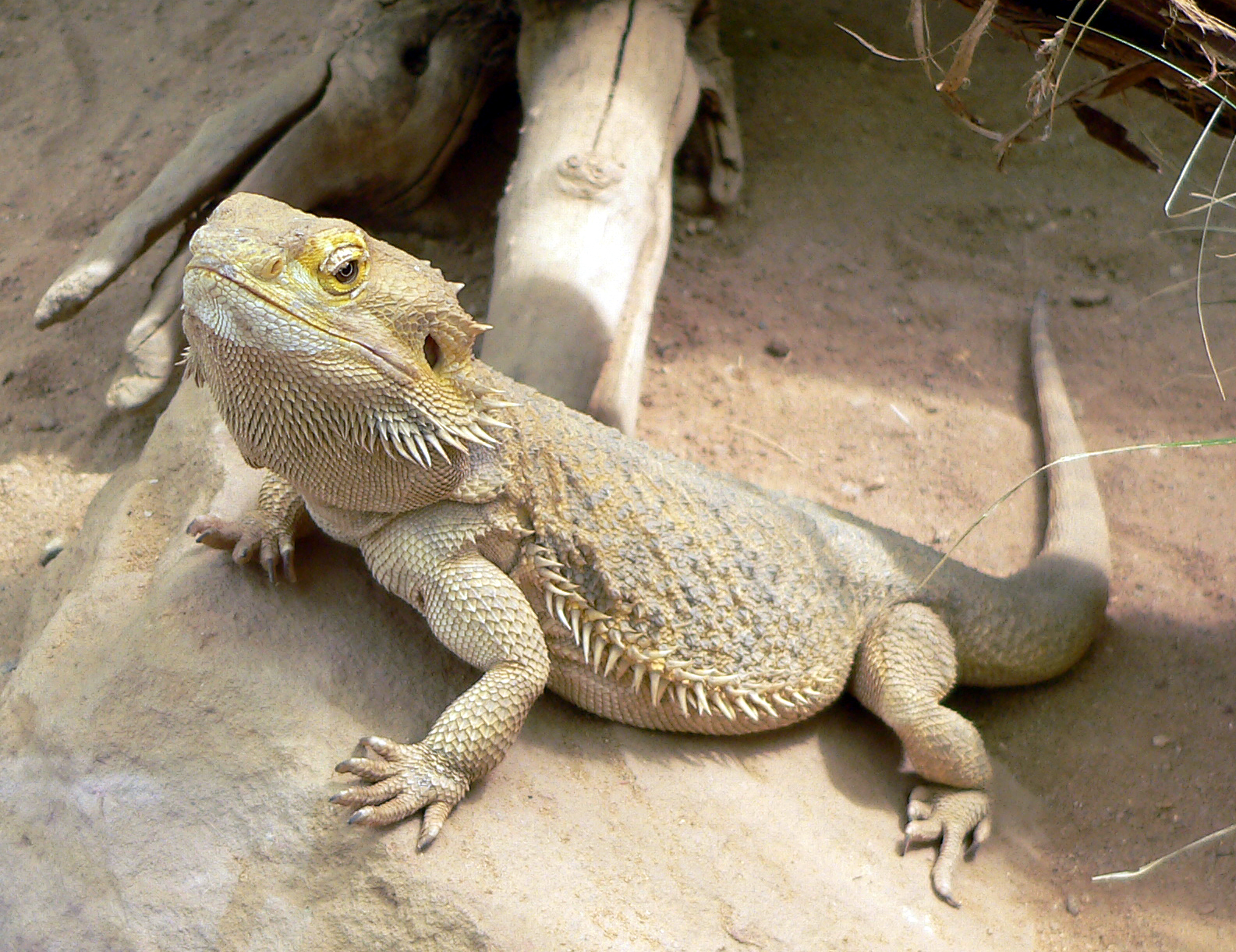
Whales and Lizards both possess limbs. Whales are mammals that live in the ocean, and Lizards are reptiles that live on the surface.

Although both species have limbs, they are used for different purposes. The limbs of whales come in the form of flippers, which are used to swim in the water (movement). The limbs of lizards, on the other hand, come in the form of arms and legs with claws, which allow them to climb vertical surfaces hold onto different surfaces easily (also for movement). These traits are not used to achieve the same goals when viewed strictly on land, or in water, but they are both used primarily for movement within each species' respective environments.
A common ancestor would definitely have had this analogous trait of limbs. Even if this ancestor originated in a completely different environment than our lizards and whales, they could have possessed their own form of limbs, as it could help with movement in its own respective environment.

Whale:

Lizard:


Thursday, September 1, 2016

Thursday, August 25, 2016

Charles Darwin: The Lamarck Effect

Although the name Charles Darwin is constantly associated with the concept of evolution, there are many figures who have helped build upon Darwin's theory. In this case, however, Jean-Baptiste Lamarck had been an inspiring individual for Darwin in order to further develop evolution as a theory. Without his work, our current understanding of evolution could be less precise than what we know it as today.

Lamarck was one of the first scientists to propose the idea that organisms changed over time. A major proposal he had was the idea of inheritance of acquired traits. This idea states that a new trait or ability obtained in one's lifetime could be inherited by their offspring for future use. When Darwin began further expanding on evolution, however, this idea was found not to be correct.

The idea that Lamarck influenced the most, is that in order for traits to evolve and change, they must be heritable. However, Lamarck believed in evolution involving the use and disuse of organs: an organ that is more utilized will be enhanced upon, but an organ underutilized will degenerate. Although Darwin believed in this sort of change in organisms, he adopted a different approach. Rather than new traits or changes taking place within lifetimes as Lamarck had predicted, Darwin hypothesized that these sorts of drastic changes could only take place through a continuity of variation over longer periods of time.

Darwin may have been able to develop his theory without Lamarck's ideas serving as a precursor. However, Darwin would potentially have to consider many other possible hypotheses, for Lamarck's work wouldn't have been readily available to critique or expand upon.

Darwin did not wish to rush publishing his work on evolution/natural selection, as he had a lot of thorough research to continue pursuing. Also, had he published it earlier than he did, he could have potentially received far more religious opposition for a theory that had been unpopular, and perceived as blasphemy.

Source(s): http://www.majordifferences.com/2013/05/difference-between-darwinism-and.html#.V7_c99QrKt8

Sunday, August 21, 2016

"If you were stranded on a desert island what two items you would take with you and why?"

In the scenario that this were to occur, the first thing I would take with me would be a journal. Not knowing how long I would be stranded, it could be helpful to document my journey as a side hobby during my time stranded on the island.

The next item of interest would be "Building a boat out of tree wood". Although material objects may be entertaining, one's survival is more important during a crisis such as this, and getting home as soon as possible must be my number one priority.